A Bench Beneath the Canopy
A bench beneath the canopy should invite a pause, not expose you to glare or block a path. Learn how shade, sightlines and planting shape comfort.
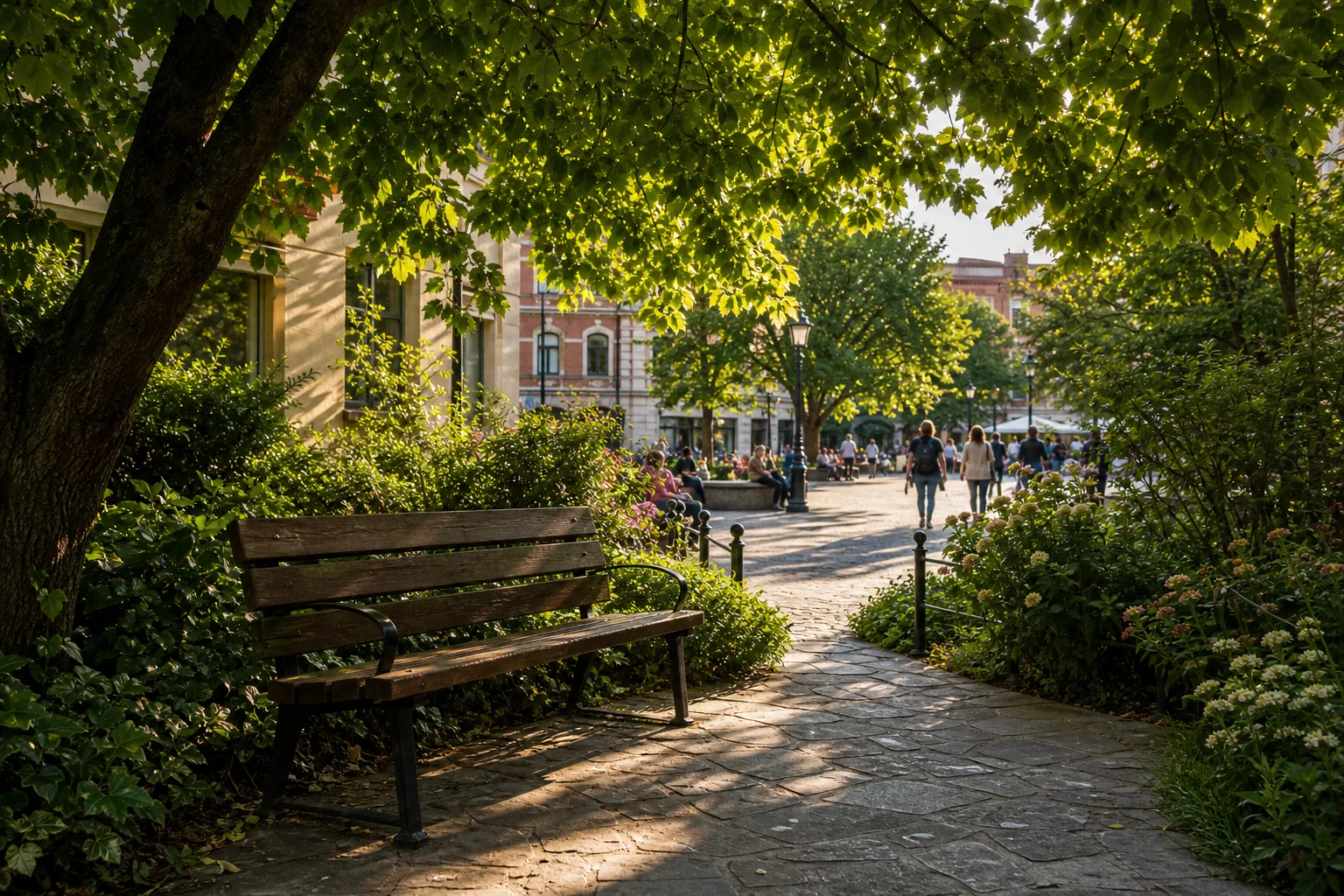
A bench beneath the canopy can feel exposed even when trees stand close by: a low branch blocks the view, the afternoon sun lands squarely on the seat, or a crowded path brushes past your knees. Comfort in a green public space depends on how shade, sightlines, routes and planting work together—not simply on adding a seat beneath a tree.
When a public corner feels awkward, start by noticing what a person sees and encounters while approaching, sitting down and getting up. Then address the particular obstacle rather than rearranging the whole space at once.
Shade misses the seat
What goes wrong: The bench sits in full sun for much of the day, or its shade disappears when people are most likely to use it. A tree’s canopy may cast a moving patch that shifts across the ground, while a nearby building throws a different shadow.
What usually causes it: The seat was placed for a clear view or convenient path, without considering the sun’s changing angle. A young tree can also offer little shelter now, even if its eventual canopy is expected to spread over the space.
What to try, in order:
- Visit the corner at different times when people might want to sit. Note where the sun reaches the seat and whether the glare falls on a person’s face.
- Look for existing shade from trees, a wall or a canopy, and consider turning or shifting the bench within the usable space.
- If the shade is seasonal, decide whether the seat should serve sunny winter days as well as warmer afternoons. Avoid relying on a future tree canopy as the only present-day solution.
- Where a change to the structure or planting is needed, ask the site manager or local authority what is practical and permitted.
Say a small neighbourhood square has one bench beside a young plane tree, and the seat is sunny during the after-school rush. The caretaker observes the shadow at that time, then turns the bench so the existing building shade reaches part of it; the expected result is a seat with a cooler option while keeping the route clear.
Views feel blocked
What goes wrong: A sitter feels tucked away from the square, or a person approaching cannot easily see the bench. Dense shrubs, a solid planter or a low tree crown may hide faces and make the corner feel isolated.
What usually causes it: Planting has grown into the sightline between the seat and the main public area. Alternatively, the bench faces a blank wall or points away from the activity that makes the place feel sociable.
What to try, in order:
- Check the view from seated height in both directions: towards the path and towards the wider public space.
- Identify the specific obstruction. Prune only where appropriate, or ask the parks team to assess shrubs and low branches before anything is cut.
- Consider rotating the seat towards a useful view, such as an open lawn or a lively square, without pointing it directly at a private window.
- Retain planting that gives shelter or habitat where it does not obscure a useful view. A selective gap can be more comfortable than stripping the corner bare.
A clear view does not mean making every planted edge low and sparse. The aim is a legible place where someone can see who is nearby and choose whether to join the activity or sit quietly.
Paths crowd the bench
What goes wrong: People have to squeeze around seated visitors, a chair or pram cannot pass comfortably, or the bench seems to sit in the middle of the route.
What usually causes it: The seat has been set too close to a busy desire line—the route people naturally take across a space—or a planting bed has narrowed the remaining passage. The problem may become more obvious when people gather nearby.
What to try, in order:
- Watch how people actually move through the corner. Look for repeated shortcuts rather than assuming the paved path is the only route.
- Keep the bench outside the main flow and leave a straightforward approach to the seat. Check that nearby paving, roots or edging do not create a trip hazard.
- Move the seat or adjust the arrangement of movable furniture before changing established trees or planted beds.
- If a permanent redesign is needed, consult the responsible council or site manager, especially where accessible routes or public paving are involved.
A comfortable pause should not come at the cost of a difficult passage. If people keep diverting around the bench, that is useful evidence about its position, not a reason to expect pedestrians to change their route.
Planting feels too close
What goes wrong: Leaves brush a sitter, damp foliage crowds the seat after rain, or the bench feels hemmed in by tall growth. In other corners, bare soil and exposed paving make the same seat feel harsh.
What usually causes it: Plants have spread beyond the space allowed for them, or the planting was chosen without considering the seated view and the room needed for access. Seasonal growth can change the feel of a corner from open to enclosed.
What to try, in order:
- Notice which plants cause the discomfort and when: fresh spring growth, summer height or wet foliage may call for different care.
- Ask the planting team to assess pruning or thinning, rather than cutting plants back indiscriminately. Keep useful cover and seasonal interest where possible.
- Check whether the bed edge leaves enough room to sit, stand and pass without stepping into the soil.
- For future planting, choose species and positions that suit the site’s shade and available space, and allow maintenance access without pushing the seat into the path.
Plants can soften a hard corner and offer a sense of shelter, but a seat needs breathing room. A narrow opening in a planted edge may preserve that sheltered feeling while giving people a clear way in and out.
Which change should come first?
How much shade should a bench have?
There is no single arrangement that suits every season or visitor. Look for useful shade during the times the corner is occupied, while retaining some sun if people value a warmer place on cooler days.
Where should a bench face?
Face it towards a view people can comfortably share, such as a garden, open space or everyday street activity. Avoid aiming it at a private home or so directly at a busy route that sitting feels like being on display.
Can shrubs stay beside a public seat?
Yes, if they leave a clear approach and do not conceal the seat or crowd a seated person. Selective pruning or a small opening in the planting may solve the problem without removing the whole bed.
Who should move or prune things?
Loose furniture may be repositioned where site rules allow, but fixed benches, street trees and public planting are usually managed by a council, landowner or parks team. Ask the responsible manager before altering them, particularly if access, tree health or safety could be affected.
A better pause
Work through the discomfort in a simple order: observe the corner, name the obstacle, make the smallest suitable change, then check how people use the space afterwards. If shade, sightlines, paths and planting are considered together, a bench beneath the canopy can feel welcoming without turning a green public corner into an empty stage.
For a bench beneath the canopy, the useful detail is often the approach: someone should be able to spot the seat, reach it without dodging through planting and leave without stepping into the main flow. That small sequence can make a quiet pause feel like a natural part of public life.
Nearby subjects
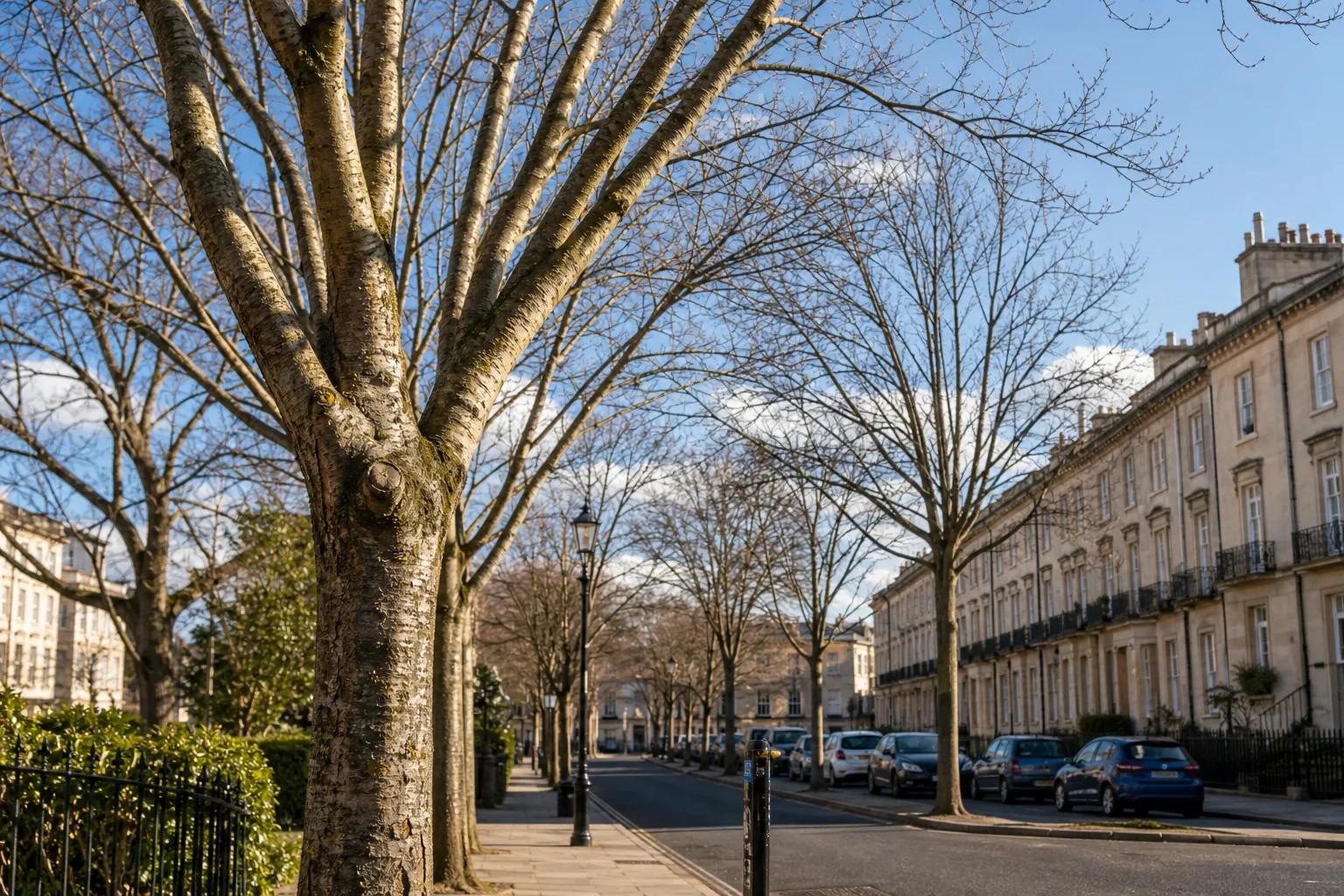
Reading a Street Tree by Its Branch Pattern
Reading a street tree by its branch pattern helps you notice species, growth habits and pruning…
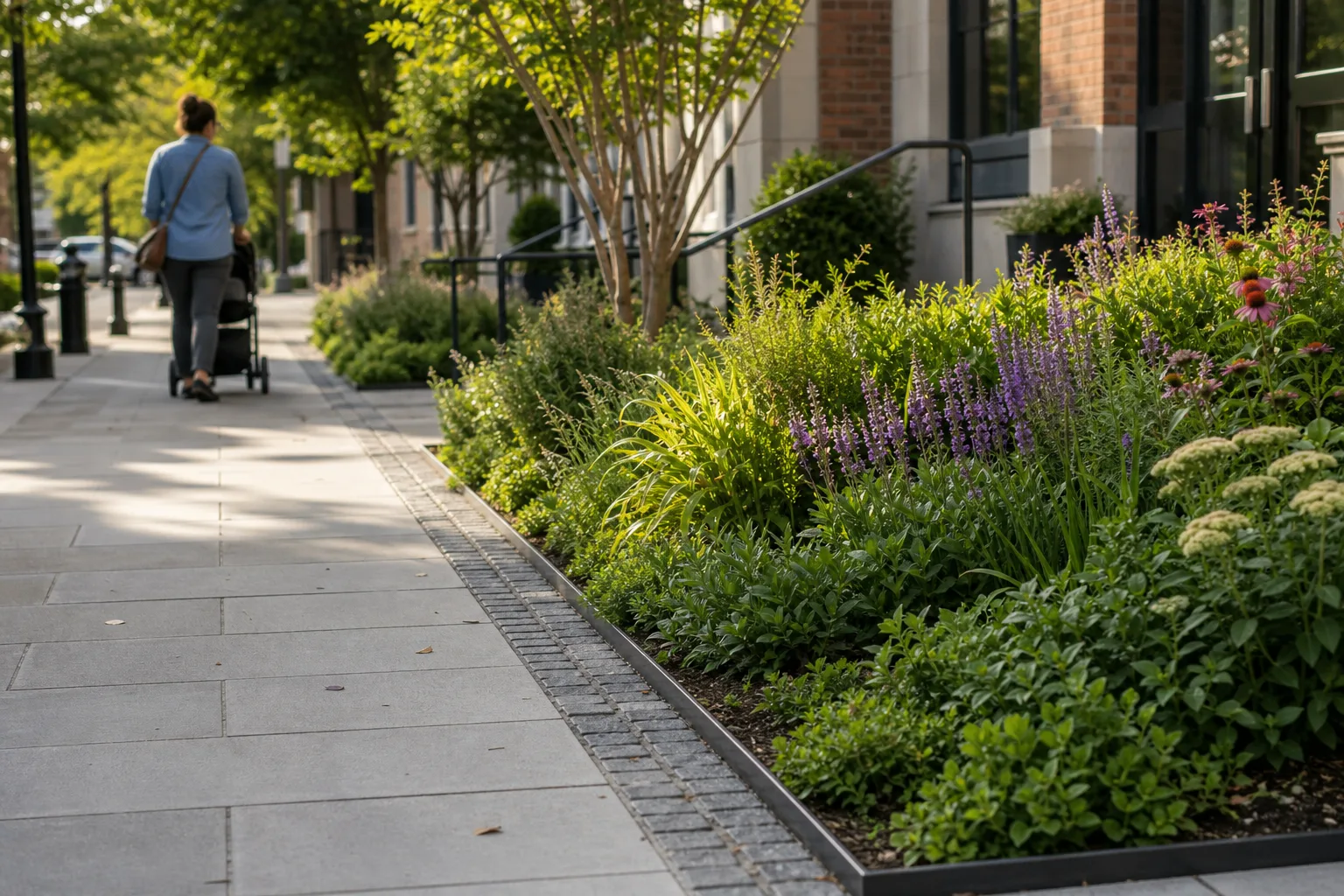
A Planting Bed That Meets the Footpath
A planting bed beside a footpath can add greenery without narrowing the route. Compare edge, planting…