The Small Wildlife of a Brick Courtyard
Small wildlife in a brick courtyard can thrive among flowers, shelter and quiet corners; learn what to notice and how to make room for it.
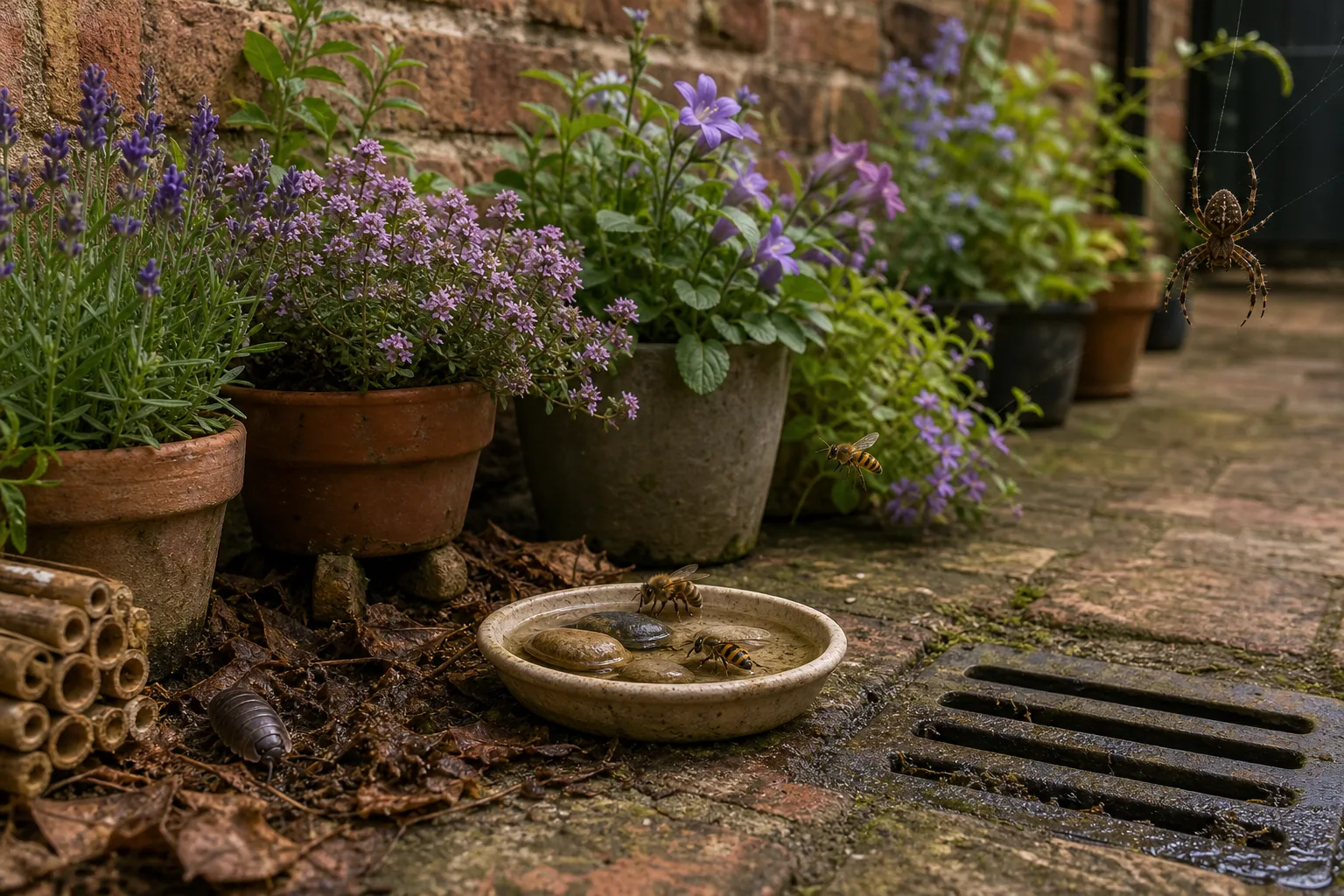
Small wildlife in a brick courtyard often gathers where people leave a little space alone: beneath a pot, beside a wall, or among flowers allowed to open fully. A paved enclosure may look sealed off, but bees, hoverflies, spiders and other small animals can use it as one stop in a wider urban habitat mosaic.
That mosaic is not a single grand green space. It is a chain of modest places—gardens, street trees, planted yards and sheltered courtyards—between which wildlife can feed, rest or find cover. A courtyard will not replace a park, but its flowers and quiet crevices can make the route between greener places more hospitable.
Small links in a mosaic
Brick walls, paving and tightly clipped planting can make a courtyard feel isolated. Yet small creatures do not need every patch to be wild or extensive; they need useful resources in reach. Nectar, pollen, shelter from wind and a place to pause can all matter in a compact space.
Different visitors use different parts of the courtyard. Bees and hoverflies may visit open flowers, while spiders hunt among leaves and gaps. Woodlice and other decomposers favour damp, sheltered spots where fallen plant material can break down.
Think of the courtyard as a stepping stone rather than an island. A flowering pot can offer food, while a sheltered corner gives a small animal somewhere to retreat. The value lies in combining these features and avoiding a space that is entirely cleared, sealed and flowerless.
Flowers through the seasons
Flowers help most when they do not all appear at once. A courtyard with a succession of blooms can offer food across changing seasons, rather than a brief flush followed by bare pots. Choose plants suited to the light: a sunny wall base differs sharply from a shaded corner beneath a stair.
For sun, consider compact herbs such as thyme and marjoram, or a pot of lavender where there is room for its mature spread. In shade, try plants such as lungwort or a suitable hardy geranium. Plant labels can help identify flowering periods and light needs; local garden centres or council planting advice may also point to varieties suited to the area.
Single, open flowers are generally easier for many insects to use than dense, highly doubled blooms. Let a few herbs flower instead of cutting every stem as soon as buds appear. If the courtyard is shared, agree where pots can sit without obstructing doors, drains or access routes.
Quiet corners and cover
A courtyard need not become untidy to offer shelter. A pot raised slightly on feet can leave a cool gap below it; a small cluster of varied pots creates more edges than a row of identical containers. Leaf litter can remain beneath a shrub or in a discreet corner rather than being swept away everywhere.
Brick joints and narrow gaps may provide resting places, but avoid deliberately blocking drainage holes or creating damp against a building. Do not prise open masonry or insert materials into cracks: that can damage the wall and may create maintenance problems. Better options include a stable log tucked beside a planter or a small bundle of hollow stems kept dry and firmly secured, if it can be placed without becoming a trip or fire hazard.
Water also shapes these small refuges. A shallow dish with stones can offer insects a place to land, provided it is kept clean and refreshed so it does not become stagnant. In a shared courtyard, use a modest, easy-to-maintain arrangement rather than a large feature that could spill or attract unwanted debris.
What should you notice?
Which visitors are using the flowers?
Watch from a short distance and note whether visitors land, feed, or simply pass through. A quick observation at different times of day can reveal which flowers attract activity without requiring you to handle or identify the insects.
Where does the wind ease?
Compare an exposed pot with one near a sheltered wall, while keeping clear of vents and accessways. The calmer spot may retain flowers and provide a more protected place for small animals to rest.
Does the courtyard offer blooms in more than one season?
Look at what is flowering now and what will follow as the season changes. If every plant blooms at once, add a suitable species with a different flowering period rather than simply adding more of the same.
Which areas can stay undisturbed?
Identify a corner where leaves, a planter gap or a small piece of woody material can remain without causing a nuisance. Keeping that patch in place through routine tidying gives wildlife cover that a freshly swept surface cannot provide.
Care without over-tidying
Good courtyard care is selective, not neglectful. Remove diseased foliage and deal with hazards, but leave healthy stems or fallen leaves where they are unobtrusive and useful. Check pots for dry compost, clear drains, and keep routes and emergency exits open.
Avoid broad-spectrum insecticides, which can affect helpful visitors as well as the intended pest. For a plant problem, first identify what is causing it; hand removal, pruning or changing watering may be enough. Where a persistent infestation threatens valuable planting, ask a qualified horticultural professional about a targeted response.
Imagine a bare brick courtyard with one sunny wall and a drain that must stay clear. The residents add a thyme pot and a shade-tolerant flowering planter, leave a small leaf-covered area behind one container, and keep the main route open; the expected observable result is a courtyard with flowers in different conditions and a discreet sheltered patch, ready for occasional visiting insects.
Small wildlife in a brick courtyard depends less on turning every corner green than on making a few deliberate places useful. Choose flowers for the actual light, keep one safe patch undisturbed, and notice what changes before adding more. Those modest choices can help connect a hard-edged courtyard to the living spaces around it.
Nearby subjects

Reading a Street Tree by Its Branch Pattern
Reading a street tree by its branch pattern helps you notice species, growth habits and pruning…
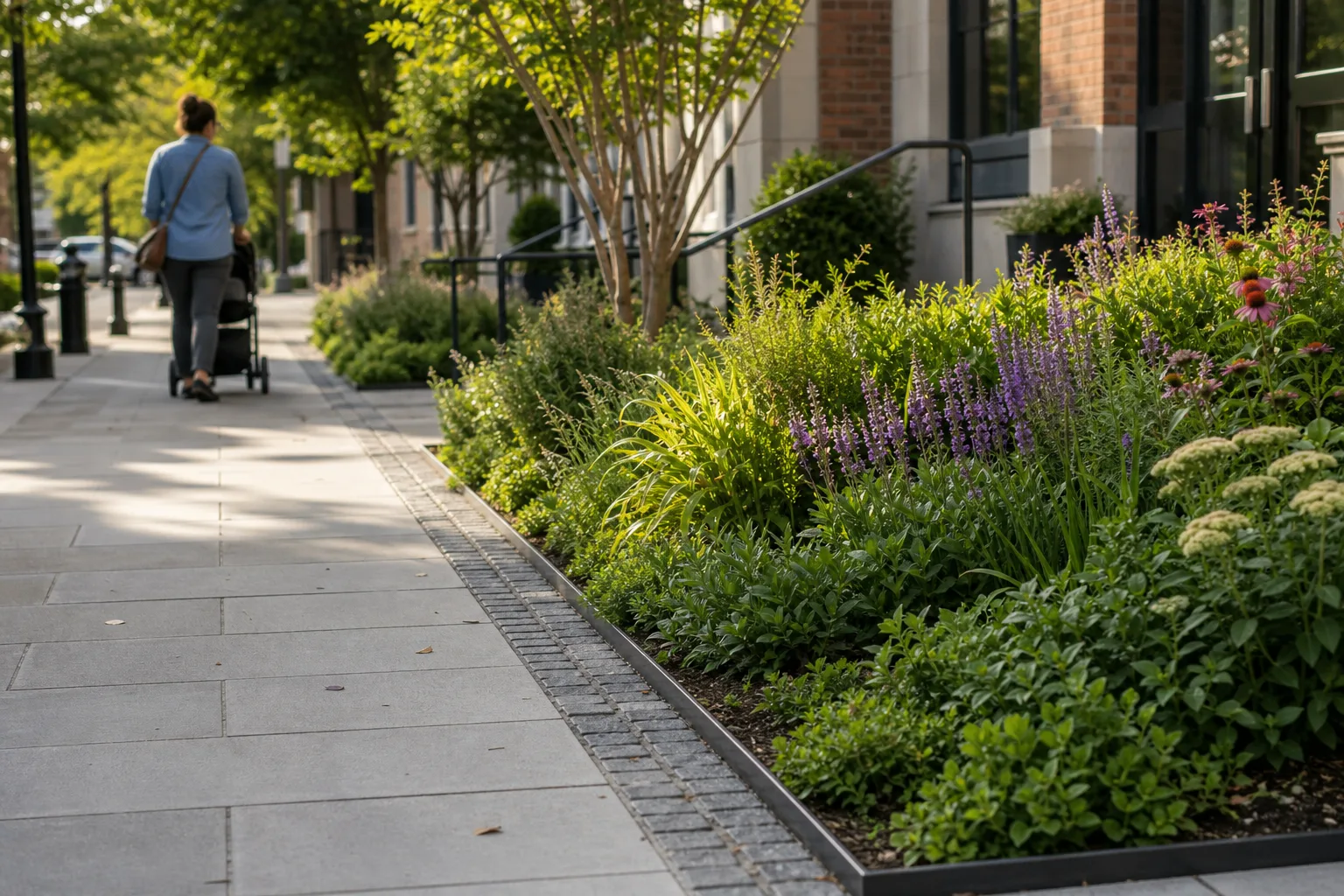
A Planting Bed That Meets the Footpath
A planting bed beside a footpath can add greenery without narrowing the route. Compare edge, planting…