A Planting Bed That Meets the Footpath
A planting bed beside a footpath can add greenery without narrowing the route. Compare edge, planting and layout choices for a comfortable shared space.
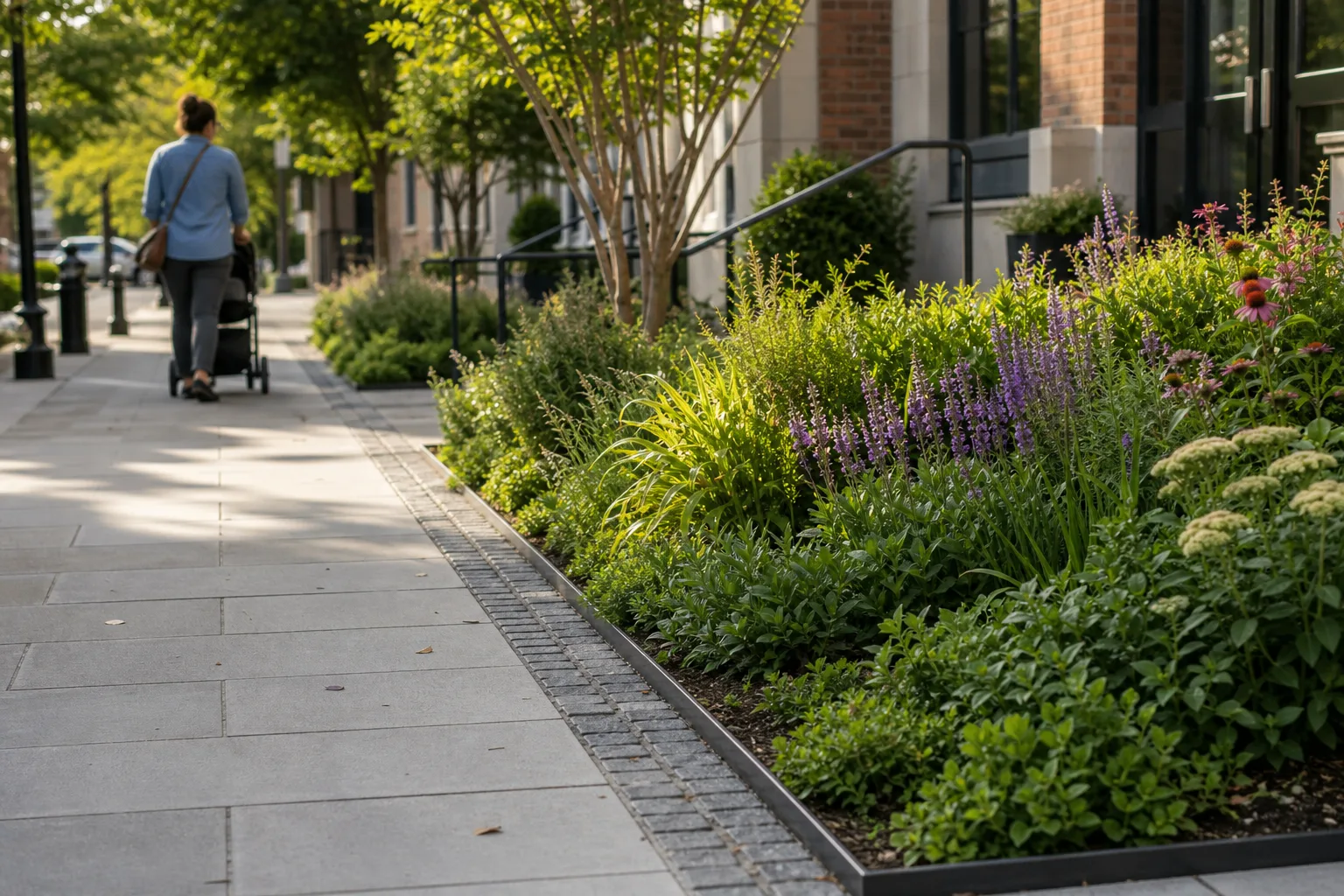
A planting bed beside a footpath needs a clear boundary and enough room for plants to grow without leaning into the walking line. A sound design makes the edge legible, keeps leaves and branches where they belong, and gives people a comfortable route past the greenery.
There is no single best border. A low, open edge suits a generous path; a raised kerb can protect a bed from trampling; and a flush transition may work where wheels need to cross freely. Choose by looking first at the path’s everyday users, then at the site’s space, soil and maintenance needs.
Three edge approaches
The edge is both a physical boundary and a message: it tells people where the path ends without turning the planting into an obstacle. Compare the options in place, considering mobility aids, prams, maintenance equipment and the way water moves across the surface.
Open, planted margins
A low, open edge relies on a visible change in material or planting rather than a tall barrier. For example, a narrow strip of setts or a neat line of durable groundcover can distinguish bed from paving while leaving the path visually continuous.
This approach suits broad footpaths and locations where people can pass comfortably without brushing the plants. It needs attentive planting and upkeep: stems that flop over the boundary, loose mulch or weeds spreading into paving can blur the line and make the route feel narrower.
Raised kerbs
A modest kerb gives the bed a firm, easy-to-read edge. Stone, precast concrete and brick can all work, provided the top is smooth, the finish is visible against the path, and the edge does not create a sharp or unexpected trip hazard.
Choose this approach where planting needs protection from casual foot traffic or where soil and mulch tend to spill onto paving. A raised border is less suitable at a crossing or access point if it interrupts a smooth route; there, a flush section or a deliberately designed transition may be needed.
Flush borders
A flush edge keeps paving and planting close to the same level. A narrow metal restraint or a change in paving pattern can mark the boundary without a raised lip, making this a useful option near entrances, dropped kerbs and places where wheeled movement matters.
Flush edges demand good detailing. The restraint must hold the soil in place, and the planting needs to stay below or behind the walking surface. If the border disappears under leaf litter or spreading growth, people may cut across the bed and compact the soil.
Room for people and plants
Set out the walking line before choosing the plant palette. The usable route should remain clear not only on planting day, but as foliage fills out, stems sway and maintenance takes place. Check the approach from both directions, including where the path narrows near a doorway, bin, sign or street furniture.
Do not treat the bed as spare space left over after the path is drawn. Its width must suit the intended plants and allow someone to weed, water or replace them without standing in the walking line. If the available strip is tight, choose compact forms and a restrained planting scheme rather than squeezing in shrubs that will quickly spill over.
Allow for growth above and beside the bed. A plant may fit neatly in a pot at the nursery yet spread broadly at maturity; look for its expected habit and prune only where that suits the species and setting. Keep thorny, stiff or easily broken stems away from the path edge, especially where people may brush past.
Planting and surface choices
Match plants to the conditions on the ground: sun or shade, exposure to wind, reflected heat from paving, and the moisture the soil can hold. In a sunny, exposed strip, tough, compact perennials and grasses may be easier to keep within bounds than large, soft-leaved plants. A shadier bed may suit foliage plants that tolerate lower light, but avoid placing dense growth where it hides the edge.
Mixing plants can extend seasonal interest, but a tidy and legible margin matters more than packing in variety. Keep the plants nearest the path low and relatively upright; place taller forms towards the back, where they are less likely to sweep across the route. Leave enough bare space around young plants for them to establish without burying crowns under mulch.
The surface around the plants affects both appearance and care. A mulch layer can help protect soil, but it should stay within the bed rather than wash onto the footpath. Avoid loose gravel beside a route where it could scatter underfoot; use a stable, clearly bounded surface if the design calls for mineral mulch.
Who suits each option?
- Open, planted margin: suits a wide path, a well-managed site and a planting palette that stays compact. It gives the border a softer look, but needs regular attention to keep the boundary clear.
- Raised kerb: suits a bed that needs a robust, unmistakable edge and has no essential crossing at that point. It contains soil and discourages shortcuts, but needs careful treatment at access points.
- Flush border: suits places where a continuous surface matters, such as a route beside an entrance or a crossing. It keeps movement smooth, but depends on reliable restraint and plants that remain out of the way.
For instance, imagine a narrow bed beside a community hall entrance, where people arrive with prams and wheeled bags. A designer could mark the bed with a flush metal edge, set compact plants behind it and keep the approach clear; the intended result is a boundary people can recognise without a raised lip interrupting their route.
How should you choose?
How wide should the planting bed be?
There is no useful universal width: the bed must fit the plants and leave a comfortable, unobstructed route beside it. If the available strip cannot support the desired plants without encroachment, select smaller-growing species or reduce the planting area.
Which edge is best for a wheelchair route?
A flush transition is often the simplest choice where a smooth crossing is needed, but it must still keep soil and planting in place. Check the whole route, not just the border, and ask an access specialist or relevant local authority if the design requirements are unclear.
What should you plant beside the path?
Choose plants for the site’s light, exposure and soil, then favour growth habits that remain compact and upright at the edge. Keep spiny, brittle or strongly spreading plants away from the walking line, and check mature form rather than relying on a small nursery specimen.
How do you stop mulch reaching the path?
Use a firm, well-defined edge and keep mulch back from the paving rather than piling it against the boundary. After heavy rain or routine maintenance, clear any material that has escaped before it becomes a slippery or confusing strip.
Details that keep it working
Think about maintenance access before fixing the layout. A gardener should be able to reach the bed without blocking the route for long periods, and tools such as a hand fork, secateurs and a watering wand should not need to be stored where they narrow the path. Make access points obvious rather than leaving a gap that invites people to walk through the planting.
Check drainage and levels with the paving in mind. Water should not pool on the path or carry soil out of the bed; if the site has a persistent drainage problem, involve a qualified landscape or drainage professional before installation. Keep any irrigation equipment discreet and repair leaks promptly.
Finally, agree who will maintain the boundary and what that care involves. A bed that looks crisp at opening can become difficult to read if edging shifts, weeds take hold or plants outgrow their space. For a planting bed beside a footpath, the best design is the one whose edge, plant choices and upkeep all support the same clear walking line.
Nearby subjects
Reading a Street Tree by Its Branch Pattern
Reading a street tree by its branch pattern helps you notice species, growth habits and pruning…
The Small Wildlife of a Brick Courtyard
Small wildlife in a brick courtyard can thrive among flowers, shelter and quiet corners; learn what…