Reading a Street Tree by Its Branch Pattern
Reading a street tree by its branch pattern helps you notice species, growth habits and pruning history, even when leaves are absent or hard to see.
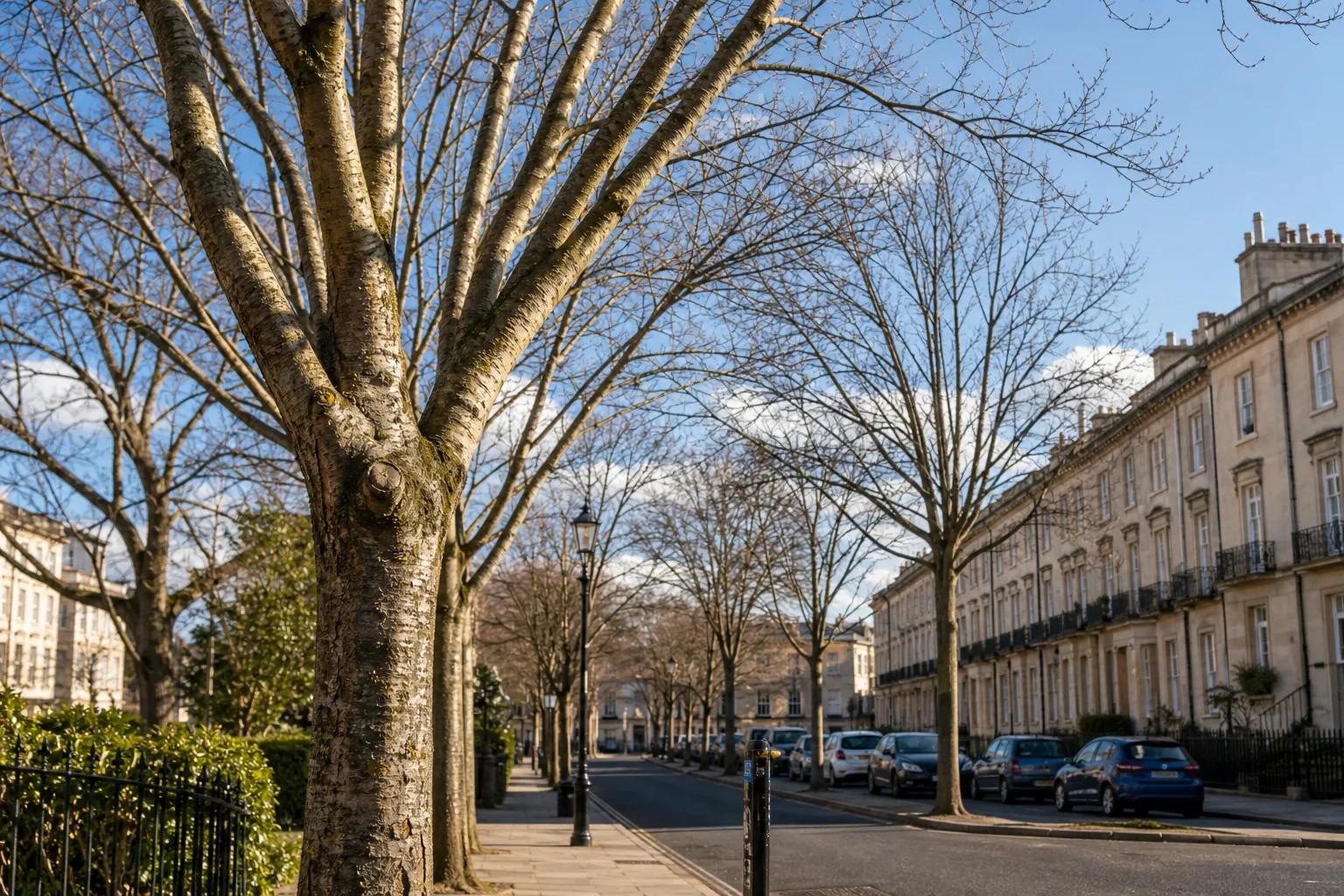
A street tree’s branch pattern can tell you what kind of grower stands above the pavement, even when its leaves are gone. Reading a street tree by its branch pattern starts with three clues: how the trunk divides, where branches sit along each shoot, and the outline the crown makes against a building or the sky.
These are field notes, not a shortcut to naming every tree. Cultivars, pruning and cramped streets can alter a familiar shape, so look for several clues together. A single fork may be an accident; a repeated arrangement is more revealing.
Start with the trunk
Stand far enough away to see the tree’s whole outline, then follow the trunk upwards with your eyes. Some trees keep one dominant central stem, with side branches stepping away from it. Others divide into several strong leaders, giving the crown a more open or spreading structure.
That distinction is easiest to spot on a young or lightly pruned tree. On an older street tree, a cut may have removed the original leader, while a vigorous side shoot has grown upwards to replace it. Look for a change in bark texture, a blunt pruning scar or a cluster of upright shoots around the old cut.
- One leading axis: the trunk continues through the crown, with lateral branches arranged around it.
- Several leaders: the trunk divides into substantial upright stems, often forming a fork or broad crown.
- A changed outline: a sudden bend, stub or tightly packed regrowth may point to past pruning or damage.
For a closer look, use a phone camera’s zoom rather than stepping into the carriageway or leaning over a cycle lane. A clear view from the footway is better than a risky angle, and the photograph can help you compare the tree’s structure in different seasons.
Look along a shoot
Choose a low branch or a fallen twig where you can inspect it without pulling or breaking anything. Find the points where leaves or buds attach. Their arrangement along the shoot is called phyllotaxis, and it can separate trees that look similar from a distance.
In an alternate arrangement, leaves and buds appear one at a time at successive points along the stem, often changing sides as they go. In an opposite arrangement, they occur in pairs at the same point, with each pair usually turned to a different angle from the one below. A whorled arrangement has several leaves arising from one level, though it is less common among familiar street trees.
Do not mistake a twig’s buds for its leaves. In winter, buds remain at those attachment points and can make the pattern easier to trace. In summer, a leafy shoot may hide the stem, so gently move your gaze along the branch rather than trying to count leaves across the whole crown.
Opposite buds are useful for narrowing a search, but they do not identify a tree on their own. Ash, maple and horse chestnut, for instance, all have opposite leaf arrangements, yet their buds, bark, leaf form and crown shapes differ. Treat the pattern as a clue to combine with others.
Read the crown outline
From across the street, notice whether the crown is broadly rounded, narrow and upright, vase-shaped, or irregular. Then look inside that outline: are branches spaced fairly evenly, crowded near the top, or reaching out in long horizontal sweeps?
A tree with a strong central leader may form a taller, more tapered crown, while a tree that branches into several major stems can spread more broadly. But the street itself edits the picture. A building may leave one side sparse; a line of neighbouring trees may encourage upward growth; repeated clearance pruning may produce a flatter edge above the road.
Compare the crown with nearby examples of the same apparent kind, if there are any. If one tree has a lopsided silhouette and another nearby is balanced, the difference may reflect local space or management rather than a different species. The shape is still useful: it tells you how this particular tree has adapted to its setting.
Notice the branch angles
Branch angle gives the crown its rhythm. Some limbs rise sharply towards the sky; others leave the trunk at a wider angle and extend almost sideways. Observe the main limbs first, then the finer branches at their tips. A tree can have upright major stems and a delicate, spreading outer canopy.
Look for repetition rather than judging a single limb. A regular sequence of branches can make a tree appear layered, while dense, close-set shoots give the crown a more tangled surface. The difference can be especially clear in winter, when leaf cover no longer hides the arrangement.
Angle can also help you spot recent growth. Fresh shoots near a cut are often more upright and crowded than the older branches around them. That cluster may show where the tree responded to pruning, but it is not a reason to diagnose the tree’s health from the pavement. For a concern about a hazardous branch, report it to the council or landowner responsible for the tree.
Separate tree from pruning
Street trees are often pruned to keep branches clear of buildings, signs, lights and traffic. That work can reshape a crown, so read the pruning marks alongside the natural pattern. A smooth, rounded edge may reflect careful repeated cutting; a row of blunt ends may show where branches were shortened back.
Epicormic shoots—vigorous growth arising from a trunk or older branch—can make a tree look bushier than its usual form. Look for their clustered origin rather than assuming the whole tree naturally branches that way. Likewise, a pollarded tree may carry a compact head of new shoots at the ends of older, repeatedly cut limbs.
Say you pass a street tree with a broad crown on one side and a thicket of upright shoots near a high cut on the other. The first clue suggests the tree has room to spread in one direction; the cut and clustered growth suggest management has altered the opposite side. In an invented situation, comparing a winter photograph with one taken after leaf-out could make those two features easier to distinguish, without turning either into proof of the tree’s identity.
Pair branches with other clues
Branch pattern is most useful when checked against details at eye level. Examine bark, buds, fruit and leaves where they are safely visible. A maple’s paired buds and branching may point in the same direction as its opposite leaves; an ash’s dark, clustered buds offer a different supporting clue.
Leaf arrangement is not the same as leaf shape. A simple leaf has one blade attached to the stem, while a compound leaf is divided into leaflets. Look closely at where the whole leaf attaches: leaflets share a central leaf stalk and do not each connect directly to the twig.
For a quick record, note the tree’s location, the branching clue and one other visible feature. The free iNaturalist app can help you organise observations and compare candidate identifications, but a suggested name should remain a candidate until several features agree. A local council tree map or a nearby botanical garden’s identification guide may offer another useful comparison.
What can branch patterns tell you?
Can I identify a street tree in winter?
Often, you can narrow the possibilities by studying buds, twig arrangement and crown shape. Winter views are especially useful for tracing whether buds are opposite or alternate, though several other clues are needed for a confident identification.
Does a wide crown mean a different species?
Not necessarily. Buildings, neighbouring trees, pruning and the direction of available space can all change a crown’s outline. Compare several trees and check their twigs, buds or leaves before treating shape as a species marker.
What is the difference between opposite and alternate branching?
Opposite buds or leaves appear in pairs at the same point on a shoot, while alternate ones appear singly at successive points. Follow one twig from tip to base to see the pattern clearly.
Can a branch pattern show whether a tree is healthy?
It can reveal changes worth noticing, such as dead-looking ends, dense regrowth or a broken limb, but a street-side view cannot settle a health assessment. If a branch appears unsafe, keep clear and contact the council or property owner responsible for the tree.
Keep a small field record
A pocket notebook is enough for this kind of observation. Sketch the trunk division as a simple line, mark whether the buds are opposite or alternate, and add a few words about the crown: upright, spreading, forked or uneven. A quick sketch can preserve structure better than a species name guessed too early.
Return to the same tree in another season. Leaves may reveal whether the foliage is simple or compound, while winter exposes the twig pattern and major limbs. The point is not to turn every walk into a naming exercise; it is to notice how a street tree grows, and how its form changes as it meets the limits and openings around it.
Next time you pause beneath a canopy, start at the trunk and follow one branch all the way to its buds. Reading a street tree by its branch pattern becomes easier when you give the tree one clear line of attention—and leave room for the evidence to stay uncertain.
Nearby subjects
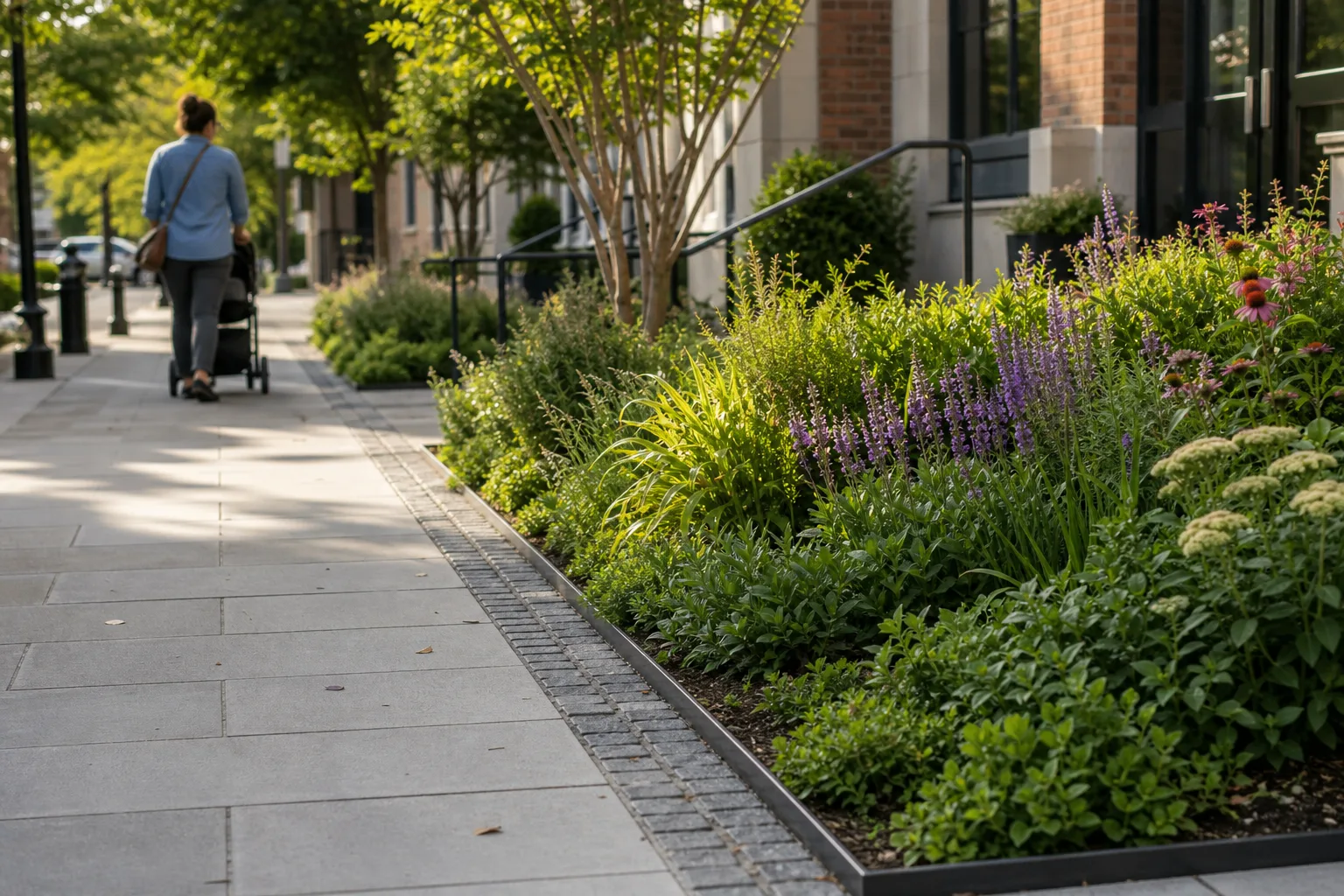
A Planting Bed That Meets the Footpath
A planting bed beside a footpath can add greenery without narrowing the route. Compare edge, planting…
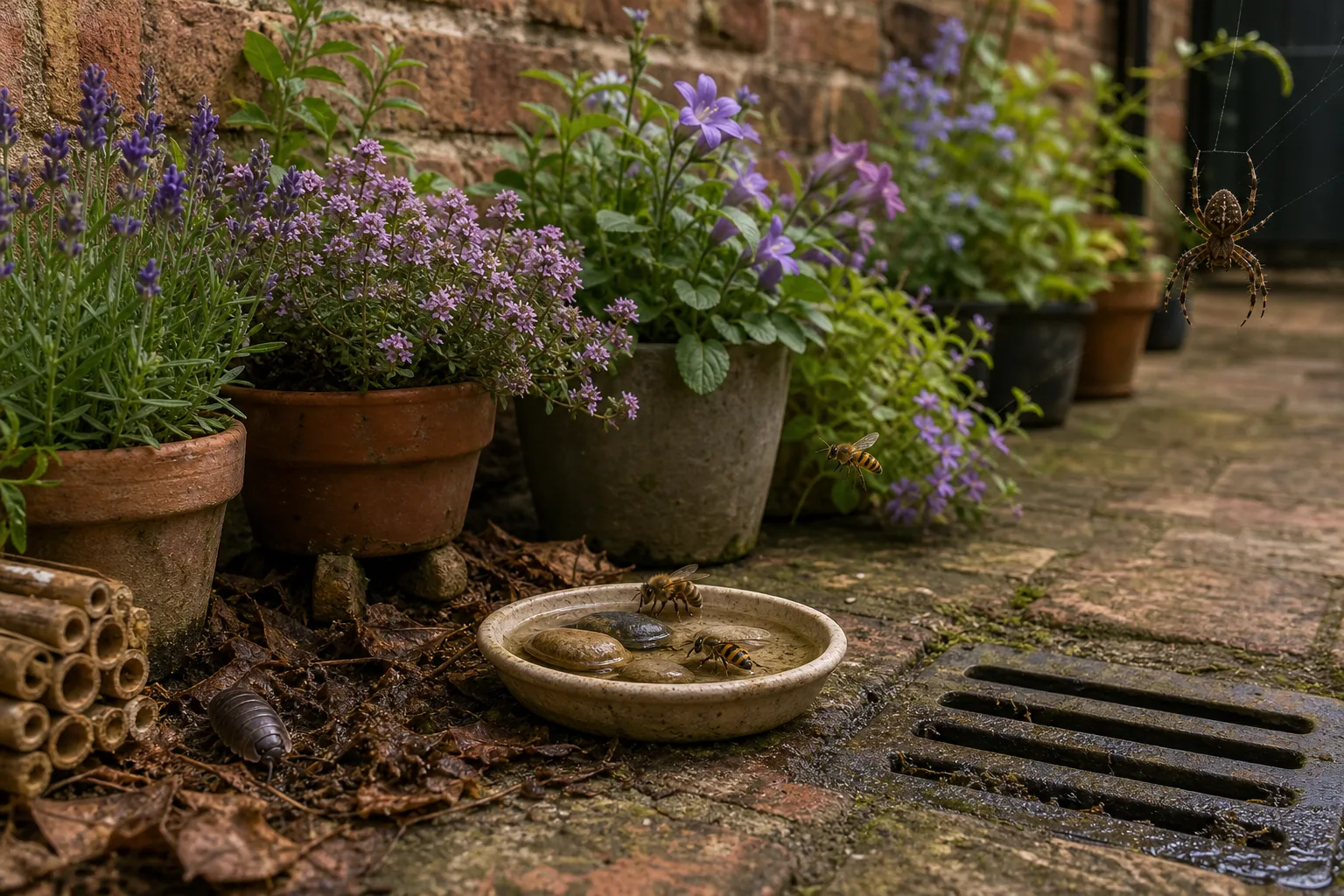
The Small Wildlife of a Brick Courtyard
Small wildlife in a brick courtyard can thrive among flowers, shelter and quiet corners; learn what…