How Victorian Parlours Made Room for Potted Plants
The Victorian parlour plant trade linked botany, publishing and domestic display. See what the evidence can tell us about the plants people kept indoors.
The Victorian parlour plant trade linked botany, publishing and domestic display. See what the evidence can tell us about the plants people kept indoors.
Planting · 4 min read
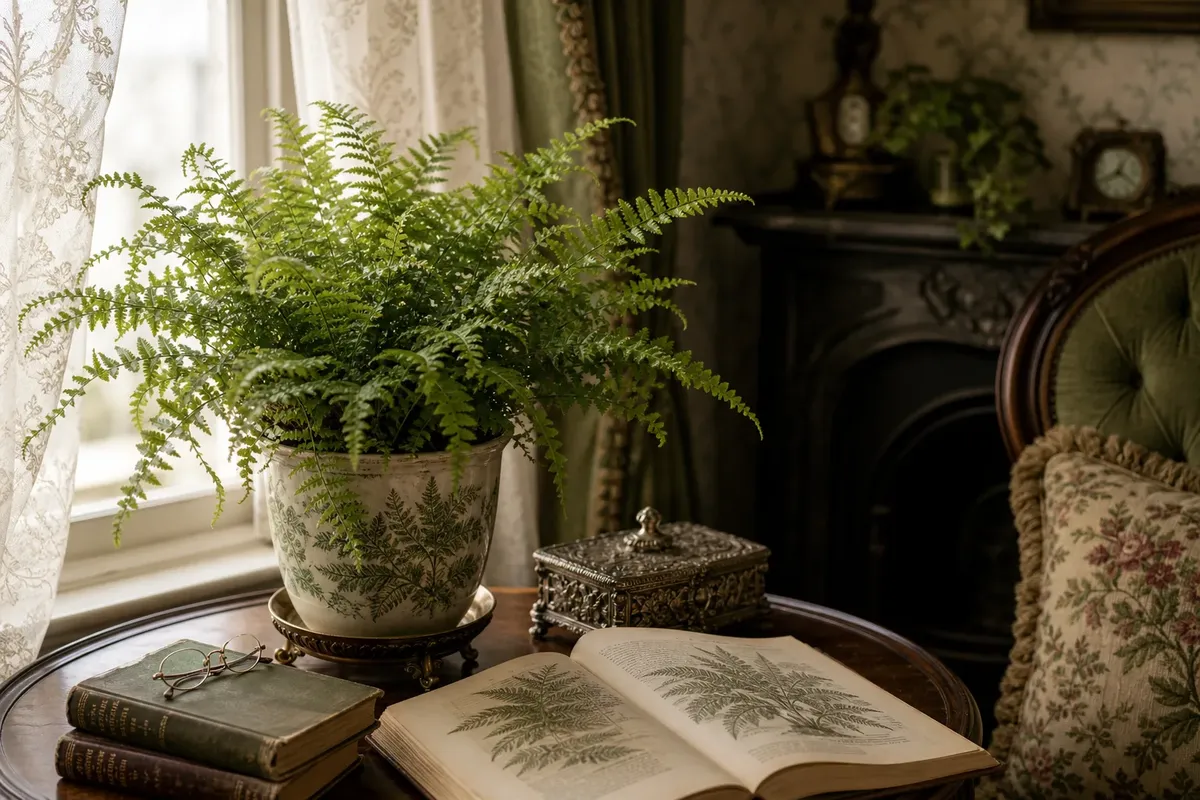
A potted fern beside a parlour window could be both a living plant and a piece of room decoration. In Victorian Britain, domestic gardening advice and the trade in cultivated plants gave some households new ways to bring greenery indoors, though the surviving record cannot tell us that every home did so.
Why did potted plants become parlour decorations?
During the nineteenth century, botany appeared in gardening publications, natural-history societies and public exhibitions. A potted plant offered a visible connection to that interest, while serving the ordinary purpose of furnishing a room.
Parlours were used to receive visitors and display signs of taste. A plant might soften a mantel or occupy a table among other ornaments. Its container, position and condition could all contribute to the room’s appearance.
Domestic display varied by household and means. A cultivated plant was one possible ornament, not a standard feature of every Victorian home.
How did plant collecting shape the market?
Commercial growers, nurseries and florists helped circulate cultivated plants in Britain. The movement of plants from abroad was also connected to imperial routes and unequal power; it did not take place apart from the political and commercial conditions of the period.
New plants could be difficult to maintain in an ordinary room. Their needs differed, and successful cultivation depended on both the species and the conditions a household could provide. Ferns became a prominent subject of Victorian collecting and display, a fashion commonly called pteridomania. Its reach varied across households and regions.
Nursery catalogues and gardening advice made plant names and cultivation guidance available to readers. A buyer might encounter a specimen through a shop or printed description, then face the less glamorous task of finding it a suitable place indoors.
What did books and magazines teach plant owners?
Printed gardening advice offered plant names, cultivation instructions and ideas for arranging greenery indoors. Books and periodicals helped circulate knowledge, but could not account for every room, window or household routine. Readers still had to adapt instructions to the space they had.
Illustrations and descriptions also shaped taste. They presented plants as living specimens and as objects to arrange and discuss. A printed page might suggest a polished display; an actual parlour also had furniture, daily work and the occasional pot put in the wrong place.
Access to books and plants was uneven. Printed guidance mattered most to people who could obtain it and had the time, money and room to act on it.
Which questions help explain Victorian parlour plants?
What was pteridomania?
Pteridomania was Victorian enthusiasm for ferns, expressed through collecting, cultivation and decorative display. It forms one part of the history of domestic plants, not the whole of it.
Were houseplants common in every Victorian home?
No single account fits every household. Income, available space, access to plants and the use of rooms all shaped what people could keep indoors.
Did Victorian plant owners rely on printed advice?
Books and periodicals circulated information about plants and their care. Their instructions offered guidance, while local conditions and individual experience still mattered.
Why are parlour plants difficult to interpret from surviving accounts?
Written advice and images often describe ideals or particular readers, rather than every household’s routine. They are evidence of interest and taste, not a complete record of how all people lived.
How can a historical account avoid overclaiming?
A careful account identifies its place and period, then separates direct evidence from inference. A catalogue can show what a seller offered; a gardening column can show what an editor considered worth explaining. Neither, by itself, establishes how common a plant was in ordinary rooms.
Imagine a reader in Victorian Britain finding a gardening magazine that describes ferns for indoor display. The starting evidence is the printed advice, not an assumption about that reader’s home. If the item gives cultivation guidance, it records practical instruction; it does not establish that the reader bought a fern or successfully grew one. The defensible conclusion is narrower: printed material circulated plant knowledge, while actual ownership remains a separate question.
Surviving evidence is uneven, so keep the claim close to the source. A mention in print supports a statement about print; a claim about household practice needs evidence of household practice.
What remains of the Victorian parlour tradition?
The Victorian parlour plant belonged to a particular mix of commercial access to cultivated species, popular interest in botany and rooms arranged for display. Ferns make one strand of that history visible, but they were not its only plants or its universal centre.
The useful historical point is that plants entered domestic interiors through specific channels: trade, print and changing tastes. A catalogue can establish what was offered, and an advice column can reveal what readers were told. Neither tells us, without further evidence, what grew on every parlour table.