Terracotta, Glazed Ceramic, or Plastic? Choosing a Pot
Choosing a pot means matching weight, moisture behaviour and handling to your plant and routine, so containers suit the space as well as the foliage.
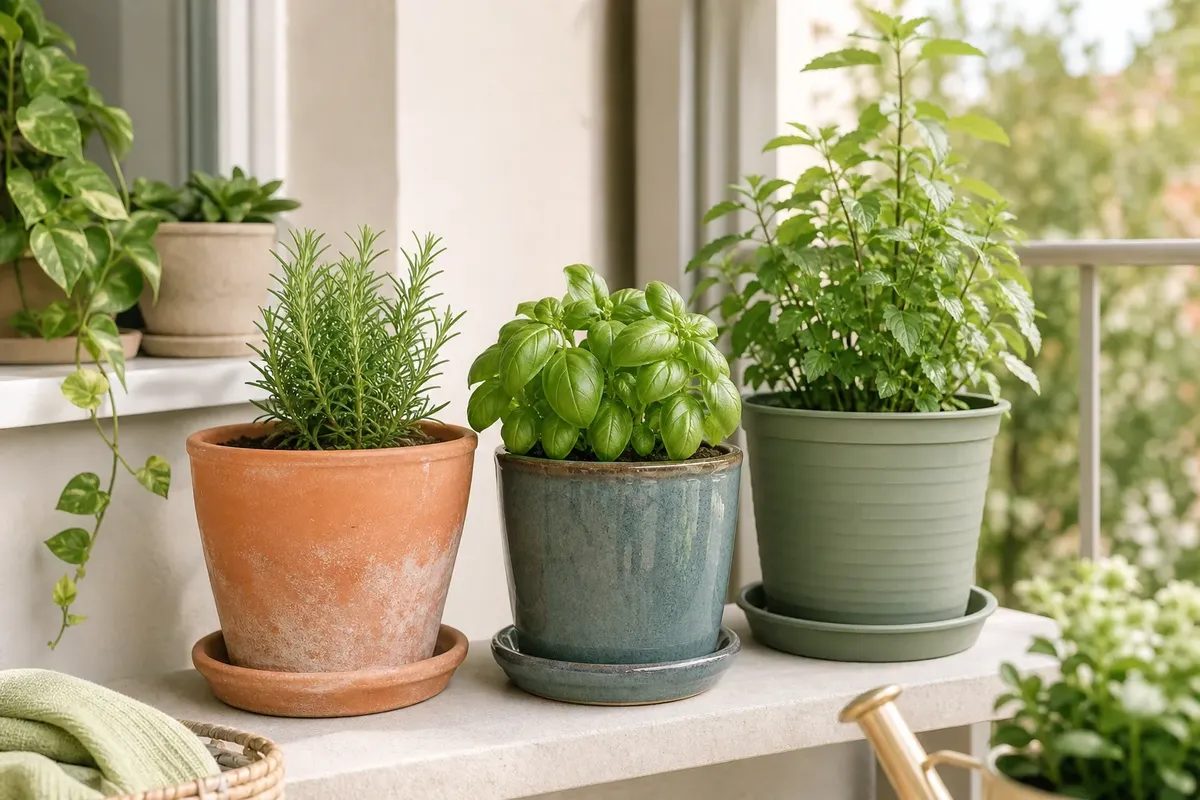
Choosing a pot means matching weight, moisture behaviour and handling to your plant and routine, so containers suit the space as well as the foliage.
Containers · 7 min read
You are carrying a basil plant back from the garden shop when the pot catches on the stair rail. Choosing a pot for a small space is partly a question of what the plant needs, and partly of what you can lift, move and keep tidy. Terracotta, glazed ceramic and plastic each behave differently once they are filled with compost and watered.
For a balcony, windowsill or courtyard, the best material is not automatically the one with the prettiest finish. Start with how often you water, whether the pot will need shifting, and how much moisture the plant prefers. Then consider drainage, stability and the space available for the container.
How does each pot material behave?
Terracotta is porous: moisture can pass through its walls and evaporate. That can leave compost drying sooner than it would in a non-porous pot. The same feature gives the pot a matt, earthy surface and can help prevent the outside staying slick with condensation.
Glazed ceramic has a fired clay body covered by a glass-like coating. The glaze slows water loss through the sides, so moisture is retained more than in unglazed terracotta. The body can still be heavy, and a decorative glaze does not tell you whether the pot has a drainage hole.
Plastic is light and non-porous. It usually loses little moisture through its walls, which can make watering less frequent than with terracotta under otherwise similar conditions. It is also easier to carry, though a lightweight empty pot may shift in wind, and a thin pot can flex when lifted full.
In all three materials, drainage depends on the pot’s design rather than its name. A hole lets excess water escape; a saucer catches it but should not become a permanent reservoir unless the plant’s care needs call for that arrangement.
Which pot suits your routine?
Choose terracotta if you tend to water readily and want to monitor moisture. Its porous sides can suit plants that prefer compost to dry between waterings, provided you keep an eye on the soil rather than assuming the pot has done the work for you. It can be a poor fit for someone who often forgets to water, or for a plant that dislikes drying out.
Choose glazed ceramic if you want a substantial, finished container and can manage its weight. It can be a sensible choice for a windowsill or sheltered courtyard where the pot will stay put. Check that it has drainage, and think through how you will move it before filling it; a full ceramic pot is not a light styling decision.
Choose plastic if low weight and easy repositioning matter most. It suits renters, narrow balconies and shelves that need occasional rearranging. Since its walls do not absorb water, check compost moisture rather than relying on the surface of the pot as a clue.
Choose by the plant as well as the room. A thirsty leafy plant and a plant that prefers a dry interval do not ask the same thing of a container. If you are unsure, a plastic nursery pot with drainage, set inside a decorative outer pot, lets you lift the plant out to water and drain it before returning it.
What should you compare before buying?
- Weight when full: Consider the filled pot, not the empty one. A large glazed pot may be awkward on a narrow sill; a light plastic pot may need a stable position on an exposed balcony.
- Moisture routine: Match porous terracotta or moisture-retaining glazed and plastic walls to how often you can check the compost.
- Drainage: Look for an open drainage hole if the plant and growing medium need free drainage. If the pot has none, decide whether it will serve only as an outer cover.
- Handling: Check for a rim or shape that is comfortable to grip, and leave room to lift a nursery pot from its cover pot.
- Surface and finish: Terracotta can mark a surface as it weathers; glazed ceramic may be easier to wipe; plastic can scuff. Use a saucer or mat where the surface needs protection.
- Stability: A broad base can help a tall plant feel less top-heavy. Consider the position and exposure to wind rather than relying on the container material alone.
- Fit: Make sure the pot leaves room for the plant’s roots and can sit where you intend to use it, without obstructing a door, tap or window.
Pot design and plant-care directions vary, so check the plant label and the pot maker’s instructions where relevant, along with any local rules for balcony use.
How do you choose for common small-space situations?
For a sunny sill and a forgetful waterer: Plastic or glazed ceramic may be easier to manage than terracotta because the pot walls lose less moisture. Choose a size that fits the sill securely, and check compost moisture before watering; retained moisture is not a reason to leave roots sitting in water.
For a balcony where pots move with the weather: Plastic is easier to carry in and out. If it feels too light once empty, put it in a sheltered, stable position or use a heavier outer pot, while keeping the inner pot removable for drainage.
For a courtyard plant that stays in one place: Glazed ceramic can work well when its weight is manageable and the base has drainage. It may be less convenient if you need to shift the plant for cleaning, access or seasonal changes.
For a plant that prefers a drying interval: Terracotta is worth considering, especially if you tend to overwater. Let the compost, not a rigid calendar, guide the next watering.
Say you have a small rosemary plant on a breezy balcony, a terracotta pot that dries quickly, and a habit of being away for a weekend. You might instead choose a drained plastic pot, keep it in a steadier spot and check the compost before leaving; the expected result is less rapid moisture loss from the pot walls and a container that is easier to move. The plant’s actual needs still decide when it should be watered.
Does the material change how you handle the pot?
It does, but the differences are practical rather than mysterious. Terracotta can become brittle if knocked and may develop pale mineral marks as water evaporates through it. Glazed ceramic can chip or crack if dropped, while plastic is less fragile but may bend under the weight of wet compost.
To avoid a heavy lift, decide where the pot will live before filling it. Use a saucer or plant caddy if the surface needs protection or the container may need moving, and keep drainage unobstructed. A caddy helps with movement; it does not make an unstable pot safe in a gust.
For a decorative look without committing to a heavy pot, use a removable plastic nursery pot inside a ceramic cover pot. Pour away water collected in the outer pot after watering unless the plant’s care instructions call for another arrangement. This also makes it simpler to inspect the inner pot and roots without tipping the whole display.
What do readers often ask about pot materials?
Do terracotta pots dry out faster?
The porous walls allow moisture to evaporate, so compost can dry sooner than in a comparable non-porous pot. The rate also depends on the plant, position, compost and weather.
Is glazed ceramic better than plastic?
Neither is universally better: glazed ceramic is heavier and has a finished surface, while plastic is lighter and easier to move. Choose according to the plant’s moisture needs, the location and your willingness to handle the filled container.
Can I use a pot without a drainage hole?
A pot without a hole is often easier to use as a decorative cover than as the plant’s growing pot. Keeping the plant in a removable drained inner pot makes it possible to empty excess water and check the compost.
Which pot is best for a balcony?
Plastic is convenient if you need to move containers, while a heavier ceramic pot may stay steadier when placed securely in a sheltered spot. Consider exposure to wind and the balcony’s permitted loading and use before choosing a large, heavy container.
Which pot is the sensible choice?
Choose terracotta when its faster moisture loss suits the plant and your watering habits. Choose glazed ceramic when you value a substantial, finished pot and can leave it in place. Choose plastic when low weight and easy handling matter more than a particular surface. For many small-space gardeners, the quiet compromise is a drained plastic inner pot inside an outer container that earns its place on the windowsill.
Before adding compost, set the empty pot in its intended spot and imagine lifting it out again. That small rehearsal can prevent a handsome container from becoming permanent furniture.