Why More Water Is Not Always More Care
Why more water is not always more care: check potting mix, leaves and drainage before watering, so you can choose whether to water, wait or investigate.
Why more water is not always more care: check potting mix, leaves and drainage before watering, so you can choose whether to water, wait or investigate.
Care · 7 min read
You reach for the watering can because the basil looks tired, then notice the potting mix is still dark and cool. Why more water is not always more care becomes clear when you check the root zone before watering, rather than relying on the calendar or the leaves alone.
Balcony and windowsill pots can dry quickly, but poor drainage, cool weather or slow growth can leave them wet for longer. Use these checks in order to decide whether to water, wait or investigate.
1. Is the mix dry below the surface?
A routine can remind you to inspect a plant, but it cannot tell you what is happening inside its pot. A sunny sill may dry a container faster than a shaded corner, and a change in weather or growth can alter the pattern.
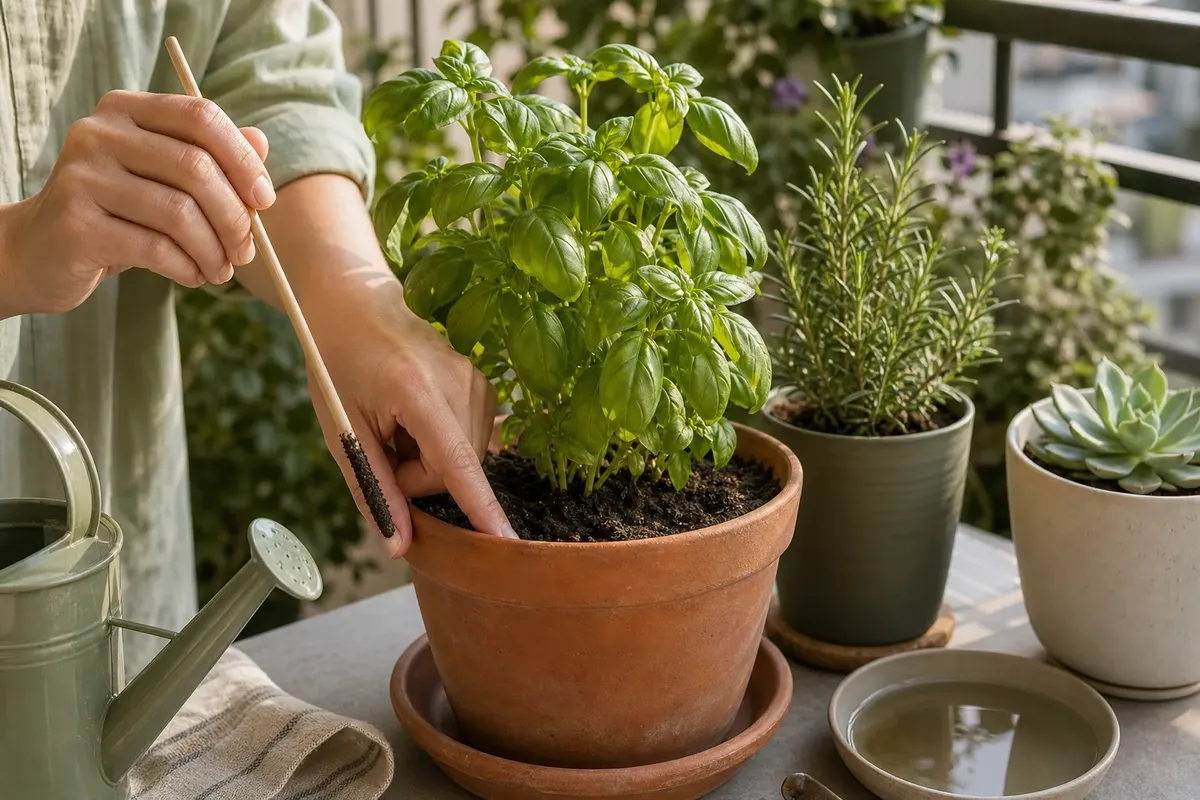
Press a finger gently into the mix, or insert a clean wooden chopstick a little way down and inspect what clings to it. If the deeper mix is cool or damp, wait; if it feels dry, continue with the other checks before watering.
For a small pot, lifting it can offer another clue. If it feels unusually light compared with its familiar weight, check the mix and the plant’s needs rather than treating weight as a verdict.
2. Does a dry-looking surface tell the whole story?
Not necessarily. Sun and moving air can dry the upper layer while lower mix remains moist. Check more than one point in a broad pot, and do not rely on a crack at the edge: as mix dries and shrinks, water can run down the gap without soaking the centre.
Say you have a rosemary pot on a sheltered sill. The surface looks dusty, but a chopstick from the middle comes out cool with damp mix clinging to it. Wait and check again later rather than giving the pot another drink.
3. What are the leaves telling you?
Wilting, yellowing and curled leaves are clues, not instructions. A plant may droop when dry, but roots in persistently wet mix can also struggle. Check whether one older leaf is fading or the whole plant is sagging, and look at stem firmness and new growth.
If the mix is damp and the plant still looks unwell, do not add water as a reflex. Check drainage and recent changes in position or conditions.
4. Can excess water leave the pot?
Look for drainage holes and check that they are not blocked. A decorative cachepot or saucer can hold runoff, so empty standing water after watering rather than leaving the pot in it.
If water rushes straight through, dry or compacted mix may be letting it run down the sides. Apply water gradually so the mix has time to absorb it. If drainage is slow, inspect the holes and the condition of the mix; if a pot has no clear route for excess water, avoid frequent top-ups and consider moving the plant to a suitable draining container.
5. Does this plant need the same treatment as its neighbours?
No. A leafy basil plant in active growth may use water sooner than a slow-growing succulent. A large volume of damp mix around a small root system can also stay wet longer than a smaller pot of mix.
Check each container individually, even when several plants share a tray. If their needs differ, separate them where practical so watering one does not keep another too damp.
6. Has the weather changed the drying pattern?
Warm sun, moving air and active growth can make mix dry sooner. Cooler conditions, cloud and reduced growth can slow water use. Rain may reach one balcony pot while an overhang shelters another, so check the compost itself rather than judging by wet leaves.
After a change in weather, inspect the root zone again instead of carrying on with the old routine. On a balcony, check whether rain reaches the potting mix, not merely the foliage.
7. Is the plant still drooping after watering?
That is a reason to investigate, not an automatic request for more water. If the mix is wet, check for runoff trapped in an outer pot, blocked holes or a persistently soggy root zone. Let excess water drain and allow the mix to move towards a less wet state before deciding again.
If the plant continues to decline, consider damaged roots, a sudden change in conditions or an unsuitable position. For an unfamiliar or valuable plant, ask a local horticultural adviser to help identify likely causes.
8. How should you water when the plant is ready?
When the root zone is dry enough for that plant, water the mix rather than the leaves. Aim to moisten it evenly and let excess drain away. If dry mix has pulled from the pot or resists water, apply water gradually so it can absorb it rather than letting it run straight through.
Check the saucer or cachepot afterwards and empty any runoff. Then judge when to inspect again by the plant, container and conditions, not by an automatic schedule.
9. Would a short record clarify the pattern?
Some plants are difficult to read, especially after a move or during changeable weather. Note the date, whether the mix was dry or damp below the surface, and what action you took. A phone note or plant label is enough.
Use the record as a guide, not a fixed schedule. Changes in growth, season, position or container can alter how quickly the mix dries.
10. Which decision follows from each check?
Use each observation to choose an action. If the first condition is present, follow the first action; otherwise, follow the alternative.
- Check the mix below the surface. If it is damp or cool, wait and inspect again later; if it is dry deeper down, check the plant’s needs before watering.
- Check the drainage holes. If they are blocked, clear them where safe or move the plant to a draining pot; if they are open, confirm that excess water can leave.
- Check the saucer or cachepot after watering. If water is standing there, empty it; if it is dry, continue to judge the mix rather than topping up automatically.
- Check whether water runs straight down the sides. If it does, apply it gradually to dry mix; if the mix wets evenly, let excess drain normally.
- Check for drooping while the mix is wet. If the plant droops, withhold more water and investigate drainage or other changes; if the mix is dry, water the root zone and observe the plant.
- Check whether rain reaches the compost. If an overhang keeps it dry, assess the root zone and water only if it is dry enough for that plant; if the mix is already moist, wait.
What should you check before watering?
How can you tell if potting mix is dry below the surface?
Feel a little below the top with a finger, or use a clean wooden chopstick and inspect what clings to it. If deeper mix remains cool and damp, wait and check again rather than watering by appearance alone.
Should you water a wilting plant straight away?
Check the mix first, because both dry and overly wet roots can be associated with drooping. If the mix is wet, do not add water; check drainage and allow excess moisture to leave.
Is bottom watering suitable for a small pot?
Bottom watering can help a dry mix absorb moisture through drainage holes, provided the pot is suitable and excess water is removed afterwards. It does not correct poor drainage or mean the plant should sit in water indefinitely.
Does rain mean balcony plants do not need watering?
Not necessarily: an overhang, wall or railing can shelter a pot, and light rain may not wet the root zone. Check the mix itself, since wet leaves do not confirm that the compost has received enough moisture.
How do the checks work together?
Imagine a hypothetical basil pot with a starting quantity of one pot, one chopstick, one saucer and no measured water added. The surface looks pale, the chopstick inserted near the centre comes out cool with damp mix attached, the leaves are slightly drooped, and the saucer is empty. First, use the chopstick result to decide not to water. Next, inspect the drainage holes; suppose they are open, so leave them clear. Move the pot away from the spot where rain collects, then let it drain and check the deeper mix again later. The observable result to look for is whether the mix begins to dry and new growth remains firm. If the compost stays wet and the plant continues to decline, investigate root or position problems instead of adding water; if the mix dries and the plant steadies, continue checking before the next watering.
Why more water is not always more care is a useful question whenever a plant looks unhappy. Check the root zone, drainage and leaves, then choose to water, wait or investigate. Keep the watering can nearby; let the plant make the case for using it.