Reading a Window Before Choosing a Plant
Reading a window’s light helps you match a plant to its actual spot, account for moving sun and seasonal shade, and avoid choosing by direction alone.
Reading a window’s light helps you match a plant to its actual spot, account for moving sun and seasonal shade, and avoid choosing by direction alone.
Light and Place · 8 min read
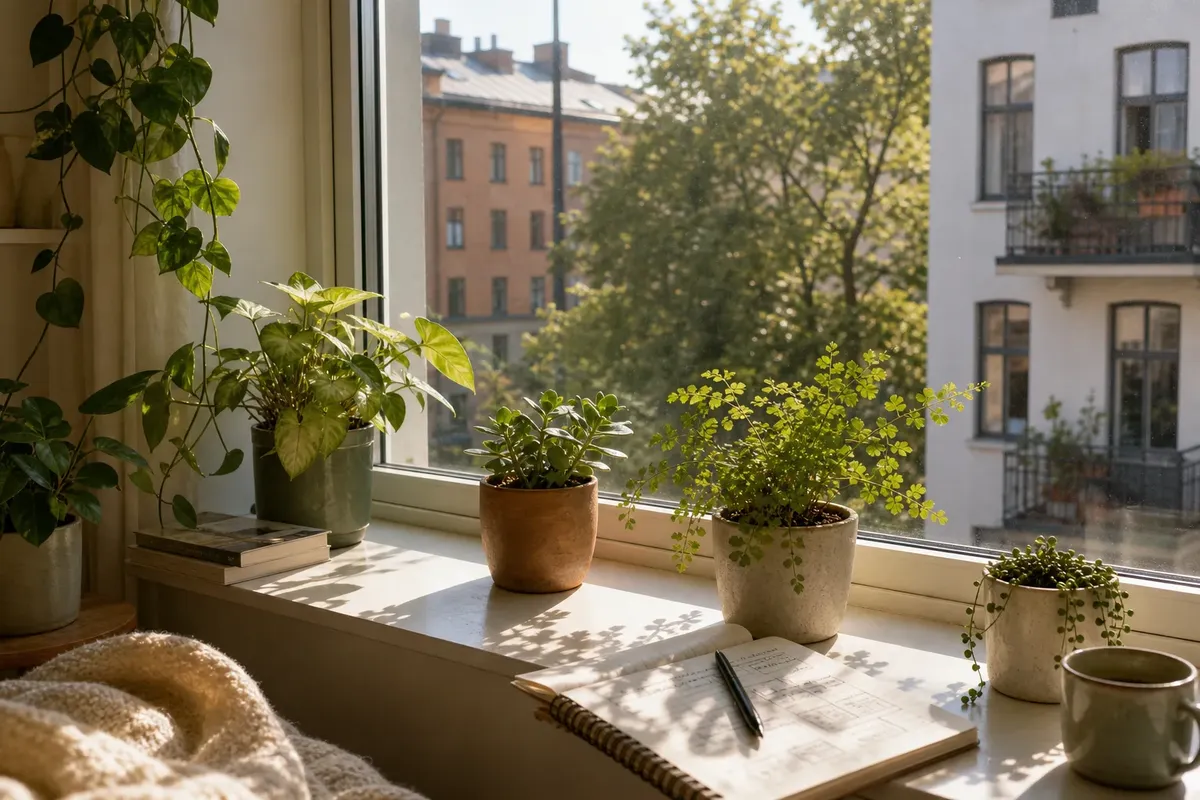
At breakfast, a stripe of sun reaches the windowsill, then slips behind the neighbouring building before the kettle has boiled. Reading a window’s light means noticing that movement, not simply calling the room sunny. That distinction helps you choose plants for the conditions they will actually receive.
Direction offers a useful first clue, but it is only part of the picture. Nearby buildings, the depth of the window recess, the season and the glazing all affect what arrives indoors. A careful look over several ordinary days is more useful than a confident guess made at noon.
What does window direction tell you?
In the northern hemisphere, a south-facing window generally receives the strongest and most direct daylight. East-facing windows get direct sun earlier, while west-facing ones receive it later. North-facing windows tend to offer steadier, indirect light, with little direct sun.
These are starting points, not plant labels. A south-facing sill shaded by a deep porch may be dimmer than an east-facing one with an open view. A west-facing pane above a pale courtyard may receive reflected light as well as afternoon sun. Direction describes where the window points; it does not describe every obstruction between the sun and your plant.
For a first estimate, use a compass app or the compass on a phone, standing near the window and facing out. In the southern hemisphere, the general pattern reverses: north-facing windows are usually brighter for direct sun, while south-facing windows tend to be more shaded. In either hemisphere, nearby surroundings can alter the pattern substantially.
Write down the direction, then treat it as a clue to check rather than a verdict.
How long does useful daylight last?
Duration means more than the length of time the room looks bright. A plant may sit in a bright room for much of the day without receiving direct sun, or catch a brief, sharp shaft while the rest of the day is subdued. Those conditions suit different plants.
For several clear or partly cloudy days, note when direct sunlight first touches the intended spot and when it leaves. Also record when the area is bright but shaded. A paper log is enough: make a note in the morning, around midday and in the afternoon, including clouds or passing shade. You do not need to watch the window continuously; the sun is quite capable of keeping time without supervision.
Pay attention to where the light falls. Direct sun on the back of the sill may not reach a plant set well inside the room. Conversely, a narrow patch can move across several pots over the day. “Brief morning sun, bright shade later” is more useful than “good light” when comparing plant descriptions.
Cloud cover matters, too. A run of overcast days can make a window appear less bright than it usually is, while one cloudless afternoon can exaggerate its intensity. Notes from different days help separate a recurring pattern from the weather’s brief opinions.
Where does the sun travel across the sill?
Light moves as the sun changes position, and the useful patch may shift vertically as well as sideways. A window may receive direct rays only when the sun is low, or only when it climbs above a roofline. The sill’s position relative to the pane, curtains, frames and exterior shade determines whether those rays reach a particular leaf.
Look for obstructions inside and outside. A curtain that is usually drawn, a deep window recess or a tree canopy can cut the light. A pale wall across the street may reflect daylight into a room; a dark wall may do little. Screens and glazing can also alter what reaches the plants, so a bright outdoor view does not necessarily mean an equally bright sill.
Imagine an east-facing window where a sunbeam crosses the left half of the sill after breakfast. You want to place one plant that tolerates gentle morning sun and another suited to indirect light. Put the first where the beam passes and the second farther back, outside its path. The expected observable result is that each plant receives a different, more suitable pattern of light; check the leaves and growth over time, since light is only one part of care.
Note the plant’s actual spot, not merely the window. When the light patch is narrow, moving a pot a short distance can change its exposure.
How does the view change with the seasons?
The sun’s path shifts through the year. A sill that receives a low winter beam may be shaded by summer foliage, while a summer sun patch can move higher or disappear behind a roof at another time. Day length changes as well, so a window’s daily pattern is not fixed.
Use your current observations to choose for present conditions, then consider what may change. Deciduous trees can block light in leaf and let more through when bare. A nearby building stays put, but the sun’s angle may alter when its shadow reaches your window. If you are choosing a plant for a particular season, make that timing part of the decision.
For plants kept year-round, reassess the sill as the light shifts. You can move a pot to a more suitable spot in the same room or rotate it so growth does not lean consistently towards the window. Rotation changes which side faces the light; it does not create more light, despite the pot’s modest theatrical ambitions.
Which plants fit the light you observed?
Match a plant’s stated preference to the pattern you recorded. Labels and care notes may use terms such as full sun, bright indirect light or low light, but those terms are not perfectly standardised. Treat them as broad guidance and look for a description that also mentions direct sun or shade.
- Frequent direct sun: Check whether the intended spot receives direct sun repeatedly. If it does and the plant’s care guidance calls for sun, consider it; if not, choose a plant suited to indirect light.
- Morning sun followed by bright shade: Check whether direct light is gentle and limited to the morning. If so, consider a plant suited to gentle sun or bright indirect conditions; if the beam is strong or prolonged, choose one described as tolerating more direct sun.
- Bright shade for most of the day: Check that the spot remains well lit without a direct beam. If it does, consider plants described for indirect light; if the area is persistently dim, look for one that tolerates lower light.
- Persistently dim conditions: Check whether the plant is specifically described as tolerating lower light. If it is, place it in the brightest available spot and keep expectations modest; if not, choose a different plant or find a brighter position.
- Seasonal shade from a tree: Check whether foliage blocks the window during the season you plan to grow the plant. If it does, choose for the shaded conditions or plan to move the pot; if it does not, use the light pattern you observed for the current season.
- A narrow moving sun patch: Check whether the beam reaches the pot itself or only another part of the sill. If it reaches the pot and suits the plant, keep it there and observe the leaves; if it does not, choose for the indirect light at the pot’s actual position.
A window can contain more than one light condition. The sill, a shelf beside it and a table farther into the room may receive different exposure. Match each plant to its place rather than treating the room as uniform. If no available spot fits a plant’s stated needs, choosing a different plant is usually simpler than persuading the window to change its habits.
What questions help you read window light?
Is bright indirect light the same as shade?
No. Bright indirect light usually means a well-lit position without direct sun striking the plant for much of the day. Shade can be substantially dimmer, so a plant described for bright indirect light may not suit a dark corner.
Can a north-facing window grow plants?
Yes, if the window provides enough ambient daylight for the plant you choose. In the northern hemisphere, look for plants that tolerate lower or indirect light, and check whether nearby buildings or trees make the sill especially dim.
Does a south-facing window always mean full sun?
No. Exterior shade, deep recesses and the plant’s position relative to the glass can reduce direct exposure. In the southern hemisphere, the broad rule reverses, so north-facing windows are more likely to receive stronger sun.
How can you tell if a plant needs a brighter spot?
Persistent leaning towards the window or weak, stretched growth can suggest that a plant needs more light, though watering, temperature and its normal growth habit also matter. If these signs appear, try a brighter position gradually and observe the change rather than moving it abruptly into intense direct sun.
How do you use a light log to choose?
Bring the observations together in a short description: the window’s direction, when direct sun reaches the intended spot, how long the area stays bright without sun, and any seasonal obstruction. Compare that description with the plant’s light preference on its label or in a reliable care description. If the match is uncertain, choose a plant with broader tolerance and place it where your notes suggest the best available light.
Say you have a west-facing sill shaded by a neighbouring wall until late afternoon. Your notes show a brief spell of direct sun near the end of the day and bright shade beforehand. You are choosing between a plant labelled for prolonged direct sun and one described as suitable for bright indirect light or gentle sun. Choose the latter and place it where the late beam does not linger on its leaves. The expected observable result is a closer match between the plant’s stated preference and its position; its growth still depends on its other needs.
Recheck the position if the light pattern changes or the plant’s growth suggests the match is poor. Keep the notes simple enough to use: window direction, the moving sun patch and a clear description of the remaining daylight give you a better basis for choosing than “it looks bright in here”.
Reading a window’s light helps you choose plants for the place you have, rather than for an imagined version of it. Before bringing a plant home, stand where its leaves will sit and look at the daylight there. That small pause often makes the choice clearer.